The latest round of European football provided a crowded slate of storylines, ranging from high-scoring thrillers in Germany to tactical gridlocks in Italy. Across the major leagues, the narrative was dominated by intense title races and the inevitable debates surrounding officiating standards in high-stakes matches.
While the scorelines tell part of the story, the underlying tactical trends reveal much more about how the season is evolving. From the integration of vertical speed in possession-heavy systems to the resurgence of the classic center-forward, managers are adapting their strategies to break down increasingly organized defenses.
This analysis breaks down the key developments from the weekend, focusing on the heated rivalry dynamics in Spain, the goal-scoring explosion in the Bundesliga, and the compressed nature of the Serie A table. By examining the specific moments that defined these matches, we gain a clearer understanding of the broader competitive landscape.
La Liga: The Mechanics of Refereeing Controversies
Spanish football is unique in how intensely every officiating decision is scrutinized, particularly when it involves the league’s two giants. The recent draw involving Real Madrid brought this dynamic to the forefront once again, centering on a penalty appeal involving Kylian Mbappé. In real-time, close-contact situations in the penalty area present a significant challenge for referees who must distinguish between legitimate fouls and incidental contact.
The debate often hinges on the concept of “sufficient contact.” Modern attackers are skilled at positioning their bodies to invite fouls, creating a gray area for officials. When a player of Mbappé’s speed is challenged, even minimal contact can disrupt his momentum, leading to legitimate questions about whether a penalty should be awarded.
However, the broader conversation in Spain often drifts away from the technical application of the rules and toward narratives of bias. This phenomenon creates a high-pressure environment for officials, where every whistle is viewed through the lens of historical rivalry rather than objective rule enforcement. Despite the noise, statistical analysis across seasons generally suggests that officiating errors tend to balance out over time, rather than favoring one specific club systematically.
Barcelona’s Tactical Evolution and Verticality
Barcelona’s 4-2 victory over Celta Vigo highlighted a significant shift in their attacking philosophy. Traditionally known for patient, horizontal circulation of the ball, the current iteration of the team has embraced a more direct, vertical style. This evolution is necessary to break down low-block defenses that have learned to stifle pure possession play.
The integration of players with explosive pace, such as Marcus Rashford in this lineup, offers a new dimension to the attack. Unlike traditional wingers who may look to cut inside and combine, a vertical threat stretches the opposition’s defensive line, forcing them to drop deeper. This movement creates pockets of space between the midfield and defense that other creative players can exploit.

The contrast between different attacking profiles is crucial for a balanced offense. While Lamine Yamal offers dribbling craft and the ability to navigate tight spaces, the presence of a direct runner forces defenders to make difficult choices. If they step up to close down the dribbler, they risk being beaten in behind; if they drop off, they concede territory for shots from distance.
The Resurgence of the Traditional Number Nine
Across Europe, the weekend highlighted the enduring value of the specialist goalscorer. In an era where “false nines” and fluid front threes became fashionable, the impact of Robert Lewandowski and Harry Kane demonstrates that the traditional center-forward remains vital. Lewandowski’s ability to find space in a crowded penalty area was instrumental in Barcelona’s comeback.
These strikers provide a focal point for the attack, allowing the team to reset possession and sustaining pressure in the final third. Their movement is often subtle, involving double-movements to lose markers or holding their run to arrive at the perfect moment. This spatial awareness is a learned skill that differentiates elite scorers from average forwards.
Furthermore, the presence of a clinical finisher changes the psychology of the opposing defense. Defenders cannot afford a moment of lapse in concentration, which induces mental fatigue over ninety minutes. This psychological burden often leads to late-game errors, which elite strikers are conditioned to punish ruthlessly.
Bundesliga: High Lines and Transition Chaos
The Bundesliga continues to be the most open of the major European leagues, as evidenced by the high-scoring nature of the recent matchday. Results like Leverkusen’s 6-0 victory and other multi-goal thrillers stem from a tactical culture that prioritizes aggressive pressing and high defensive lines. German teams often employ “Gegenpressing,” seeking to win the ball back immediately after losing it.
When this high-risk strategy works, it suffocates opponents and leads to dominance. However, when the initial press is broken, it leaves vast amounts of space for the attacking team to exploit. This leads to “basketball-style” matches where play transitions rapidly from one end to the other, resulting in higher goal averages compared to other leagues.
The tactical commitment to attacking football means that even teams lower in the table are willing to commit bodies forward. While this makes for entertaining viewing, it also exposes defensive fragilities. Coaches in the Bundesliga must constantly balance the desire for offensive overload with the need for defensive stability against counter-attacks.
Serie A: The Art of Defensive Organization
In sharp contrast to the Bundesliga, the recent round of Serie A action featured numerous tight matches, draws, and low-scoring affairs. This reflects the Italian football heritage of tactical discipline and defensive organization. Teams like Juventus and Inter are masters at controlling the tempo of a game without necessarily dominating possession.
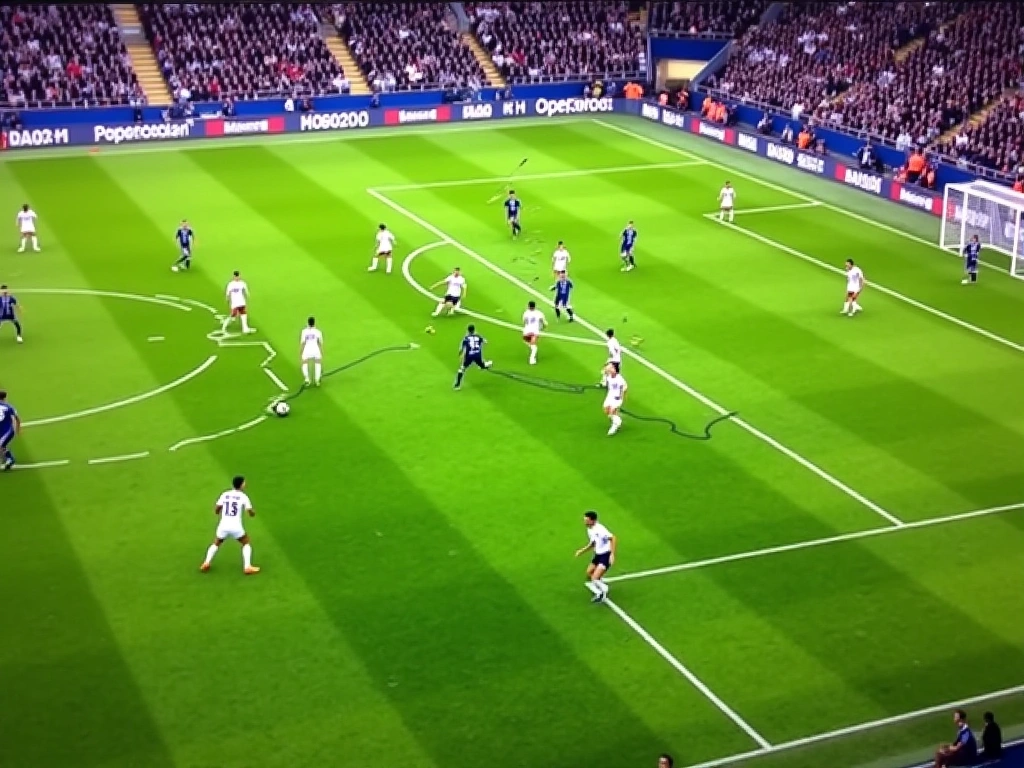
The compressed nature of the table, with Inter leading a tight pack including Roma, Milan, and Napoli, indicates a high level of parity. In this environment, a single defensive error can be the difference between three points and one. Consequently, teams often prioritize structural solidity, ensuring they are difficult to break down before committing to attack.
This defensive gridlock forces attackers to be incredibly efficient. Chances are created at a premium, meaning conversion rates become a key metric for success. The ability to grind out 1-0 wins or secure points in 0-0 draws is often viewed as a hallmark of a championship-winning side in Italy, distinct from the blowout victories prized elsewhere.
Squad Depth and Rotation Management
The crowded fixture list in European football places an immense physical demand on players, making squad depth a critical factor in the title race. The ability to rotate key players without suffering a significant drop in quality is what separates the contenders from the pretenders. Injuries to pivotal figures, such as Raphinha mentioned in the context of Barcelona, force managers to adjust their systems.
Effective rotation is not just about resting legs; it is about maintaining tactical cohesion with different personnel. A manager must ensure that the incoming player understands their specific role within the collective structure. When a team can seamlessly swap players and maintain their rhythm, it signals a robust training methodology and a clear tactical identity.
Fatigue management also plays a role in the final twenty minutes of matches. Many goals are scored late in games not due to brilliance, but due to tired minds making poor decisions. Teams with deeper benches can introduce fresh energy to exploit these moments of fatigue, turning draws into wins in the dying moments.
The Psychology of Momentum in Title Races
As the season progresses, the psychological aspect of the title race becomes as important as the physical one. The pressure of leading the table, as seen with Bayern Munich and Inter, requires a different mindset than the hunger of the chasing pack. Leaders must guard against complacency, while chasers play with the desperation of having no margin for error.
Momentum can shift rapidly based on a single result. A surprise draw for a league leader can galvanize their rivals, creating a sense of belief that the title is attainable. Conversely, a dominant win by a challenger sends a message to the rest of the league. Managing these psychological swings is a key responsibility for the coaching staff.
The mental resilience to bounce back from setbacks, such as conceding an early goal, defines the character of a champion. Barcelona’s ability to respond to Celta’s equalizer with a flurry of goals demonstrates this resilience. In the long run, the team that maintains emotional stability amidst the highs and lows of the season is usually the one that lifts the trophy.
FAQ
How does VAR influence modern refereeing debates?
Video Assistant Referee (VAR) technology was introduced to correct clear and obvious errors, but it has also introduced new layers of debate regarding subjective calls. While factual decisions like offside are now automated and precise, interpretation-heavy calls like handballs or foul intensity remain contentious. The slow-motion replays used by VAR can sometimes distort the perception of force, making standard contact look more severe than it appeared in real-time.
Why are goal tallies generally higher in the Bundesliga?
The Bundesliga is tactically distinct due to its emphasis on transition play and high defensive lines. Many teams prioritize aggressive pressing to win the ball high up the pitch, which naturally leaves space behind the defense. When the press is beaten, it creates open scoring opportunities, leading to higher aggregate scores compared to leagues that prioritize low-block defending or possession retention.
What is the tactical role of a “vertical” winger?
A vertical winger focuses on running into space behind the defensive line rather than dropping deep to receive the ball at their feet. This forces the opposition’s defense to retreat, stretching the field of play and creating gaps between the defenders and midfielders. This style contrasts with “inverted” wingers who cut inside to act as playmakers, offering managers different tools to break down defenses.
Why is the Serie A table often more compressed than other leagues?
Italian football places a heavy emphasis on tactical organization and neutralizing the opponent’s strengths. This often leads to matches with fewer clear-cut chances, increasing the likelihood of draws or narrow victories. Because the gap in tactical discipline between the top and bottom teams is often smaller than the gap in individual talent, “smaller” teams are frequently able to take points from title contenders.
How do managers handle player fatigue during crowded schedules?
Managers use squad rotation and in-game substitutions to manage physical loads. They also adjust training intensity between matches to focus on recovery rather than heavy conditioning. Tactically, a team might choose to play at a lower tempo or sit in a defensive block for periods of a match to conserve energy, rather than pressing aggressively for the full ninety minutes.
Does referee bias actually exist in major leagues?
While fans often perceive bias against their team, statistical analysis of penalties and fouls over long periods rarely supports the existence of systemic corruption or bias in major European leagues. Most controversies stem from the inherent difficulty of officiating a fast-paced game and the human element of interpretation. The perception of bias is often fueled by media narratives and the emotional investment of supporters.
What defines a “low block” defense?
A low block is a defensive tactic where a team positions its defensive and midfield lines deep in their own half, close to their own goal. The objective is to deny the attacking team space to run in behind and to crowd the penalty area. Breaking down a low block requires patience, quick passing combinations, and width to stretch the compact defensive shape.