In the modern era of football, speed has evolved from a valuable asset into a fundamental requirement for elite performance. The game is played at a blistering pace, with high-pressing systems and rapid counter-attacks dominating the tactical landscape of top leagues like the Premier League and La Liga. While technical skill and game intelligence remain crucial, the raw physical ability to cover ground quickly often determines the outcome of critical moments.
Fans and analysts frequently debate who holds the title of the fastest player on the planet. Names like Antonio Rudiger, Kylian Mbappe, and Alphonso Davies consistently appear at the top of speed charts, recorded by sophisticated tracking technology. However, understanding speed in soccer requires looking beyond a single top-speed statistic to examine acceleration, agility, and the ability to sustain pace over ninety minutes.
This article explores the mechanics of speed in professional soccer, the technology used to measure it, and the specific athletes who are redefining the physical limits of the sport. From the explosive power of wingers to the recovery pace of modern center-backs, we delve into what makes these athletes the ultimate speedsters.
The Evolution of Pace in Tactical Systems
Football tactics have shifted dramatically over the last two decades, placing a higher premium on athletic dynamism. In the past, a defender could rely solely on positioning and strength, but the introduction of the “high defensive line” has changed these requirements. Teams that press high up the pitch leave vast amounts of space behind their defense, necessitating center-backs who can sprint back to cover long balls.
This tactical shift is why players like Antonio Rudiger have become so valuable to clubs like Real Madrid. A defender with elite recovery speed allows the entire team to push forward aggressively, compressing the play and suffocating the opponent. Without fast defenders, a high-pressing system becomes vulnerable to simple counter-attacks.
Similarly, attacking transitions rely on “verticality,” a concept where the ball is moved forward as quickly as possible before the opponent can reorganize. Speedsters like Adama Traore or Kylian Mbappe thrive in these transitional moments. Their ability to exploit spaces in a matter of seconds forces opposing defenses to sit deeper, which in turn opens up midfield areas for playmakers to operate.
Measuring Velocity: How Top Speeds Are Recorded
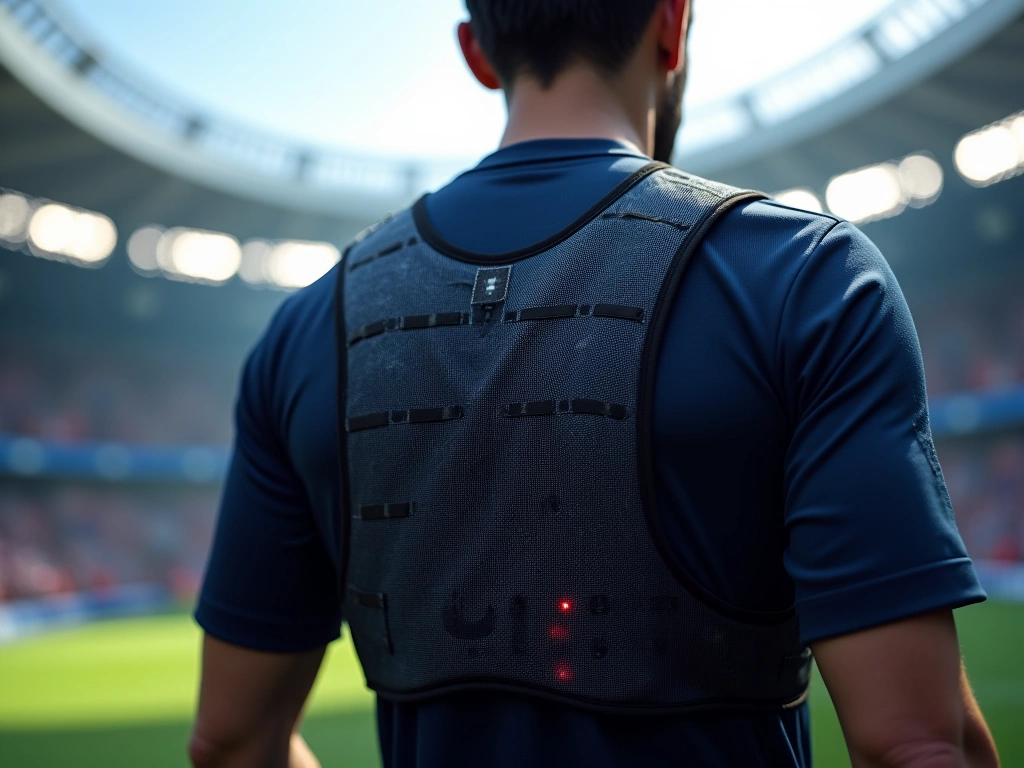
The debate over who is the fastest player is often settled by data derived from Electronic Performance and Tracking Systems (EPTS). Modern players wear GPS vests under their jerseys, often made by companies like Catapult Sports, which track their movements, heart rates, and velocities with high precision. Additionally, stadiums are equipped with optical tracking cameras that monitor every player’s position 25 times per second.
These technologies distinguish between different types of speed metrics. Top speed refers to the maximum velocity a player reaches, usually during a sprint of 30 meters or more. This is the figure often cited in headlines, such as Rudiger’s recorded speed of 36.7 km/h. However, this metric only tells part of the story.
Acceleration is often more critical in tight spaces. A player might not reach a high top speed if they only have 5 meters of space, but their ability to reach their maximum velocity almost instantly can be devastating. This “burst” allows attackers to separate from markers in the penalty box, a trait famously associated with players like Lionel Messi in his prime or Erling Haaland today.
The Defensive Speedster: Antonio Rudiger’s Dominance
Antonio Rudiger has frequently topped the speed charts, a feat that surprises those who associate speed primarily with wingers. As a center-back, Rudiger combines a massive stride length with immense physical power. His running mechanics differ from the rapid, high-frequency steps of smaller wingers; instead, he eats up the ground with long, powerful strides that generate tremendous momentum.

During his time in the Premier League and subsequently in La Liga, Rudiger recorded speeds that surpassed many recognized sprinters. This capability is termed recovery pace. When an opponent breaks through the defensive line, Rudiger’s ability to chase them down prevents clear goal-scoring opportunities, acting as a safety net for his team.
His physical profile allows him to maintain stability while sprinting. Unlike lighter players who might be knocked off balance at high speeds, Rudiger uses his upper body strength to shield the ball or muscle opponents off their path while moving at over 36 km/h. This combination of velocity and mass makes him one of the most formidable one-on-one defenders in the world.
Explosive Wingers: Adama Traore and Alphonso Davies
While Rudiger represents defensive power, Adama Traore represents pure explosive force. Traore is unique due to his bodybuilder-like physique combined with fast-twitch muscle fibers that generate instant acceleration. He has been clocked at speeds exceeding 37 km/h, often reaching his top gear within just a few strides.
Traore’s speed is utilized primarily for progressive carries, which involves moving the ball up the field individually. Defenders often face a dilemma when marking him: get too close and he spins past with acceleration, or stand off and allow him to build up a head of steam. This psychological impact disrupts defensive structures even before the ball is played.
Alphonso Davies of Bayern Munich offers a different profile, often referred to as the “Roadrunner.” His background in track and field is evident in his efficient running technique. Davies often plays as a full-back, meaning he must cover the entire length of the touchline. His speed endurance allows him to join attacks as a winger and immediately sprint back to defend, repeating these high-intensity efforts dozens of times per match.
The Biomechanics of Soccer Sprinting
Sprinting in soccer is biomechanically distinct from track sprinting. A 100-meter sprinter runs in a straight line on a consistent surface without obstruction. A soccer player must sprint while changing direction, dodging opponents, and often controlling a ball. This requires a lower center of gravity and greater core stability.
Deceleration is just as important as acceleration. The ability to stop instantly from a full sprint allows a player to shake off a defender who is still carrying forward momentum. This rapid braking puts immense stress on the joints and muscles, particularly the quadriceps and knees, requiring elite conditioning to prevent injury.
Running with the ball, or “dribbling speed,” is a separate skill set. Players like Kylian Mbappe are anomalies because their speed drops very little when they are in possession of the ball. For most players, the cognitive load of controlling the ball and the mechanical adjustment of stride pattern results in a significant decrease in velocity. Mastering the art of the “knock-on”—pushing the ball far ahead to run freely—is a key technique for speedsters.
Physiology: Fast-Twitch Fibers and Anaerobic Power
The physiological basis for elite speed lies in the composition of muscle fibers. The fastest players possess a high percentage of Type IIx fast-twitch fibers, which generate high force rapidly but fatigue quickly. This genetic predisposition is honed through plyometric training, which focuses on explosive movements like box jumps and bounding.
Training for speed in modern football also involves improving anaerobic capacity. Since sprints in soccer are repeated frequently with short recovery periods, players must be able to clear lactate from their muscles efficiently. If a player cannot recover quickly after a 40-meter sprint, their speed becomes useless for the next five minutes of the game.
Sports scientists carefully monitor “sprint distance” metrics to manage fatigue. If a player like Erling Haaland or Mohamed Salah performs too many high-intensity sprints in training, they risk hamstring strains. The balance between maintaining peak speed and avoiding muscular overload is a constant challenge for medical teams.
Contextualizing the Records
It is important to note that “fastest player” lists fluctuate throughout the season. A player might record a season-high speed in a specific match due to game state—such as chasing a desperate long ball in the 90th minute—which might not be replicated regularly. Therefore, speed records should be viewed as snapshots of peak performance rather than permanent rankings.
Players like Sven Botman, Darwin Nunez, and Mykhailo Mudryk have all clocked speeds that rival or exceed Rudiger and Mbappe at various points. The margins at the top are incredibly slim, often separated by fractions of a kilometer per hour. What remains consistent is the elite tier of athletes who can break the 36 km/h barrier.
Ultimately, raw speed is a tool, not a guarantee of success. The best players combine their velocity with anticipation, technical control, and tactical awareness. Antonio Rudiger is a world-class defender not just because he is fast, but because he knows exactly when to unleash that speed to neutralize a threat.
FAQ
Who is officially the fastest soccer player in the world?
There is no single permanent holder of this title as stats change weekly based on match data. However, Antonio Rudiger, Kylian Mbappe, Adama Traore, and Alphonso Davies consistently record top speeds between 36 km/h and 38 km/h. The “fastest” title often depends on which league or competition data is being cited at the moment.
How is player speed measured during a match?
Player speed is measured using Electronic Performance and Tracking Systems (EPTS). This includes GPS vests worn under jerseys that track velocity and distance, as well as optical tracking cameras installed in stadiums that use trigonometry to calculate player movements in real-time.
What is the difference between top speed and acceleration?
Top speed is the maximum velocity a player reaches, usually requiring 30-40 meters of open space. Acceleration is the rate at which a player increases speed from a standing start. Acceleration is often considered more valuable in soccer because most sprints are short bursts over 5 to 10 meters.
Do defenders need to be as fast as attackers?
In modern football, yes. Because many teams play with a high defensive line, defenders must have high recovery speed to chase down attackers who break the offside trap. Slow defenders are often considered liabilities in high-pressing tactical systems.
Can a player train to become significantly faster?
While genetics play a major role in determining the ratio of fast-twitch muscle fibers, players can improve their speed through technique training and strength conditioning. Improving running mechanics, core strength, and explosive power (plyometrics) can help a player maximize their genetic potential.
Why do players run slower with the ball?
Running with the ball requires a player to adjust their stride length and frequency to make contact with the ball. This breaks the natural rhythm of a sprint. Additionally, the mental focus required to control the ball slightly reduces the neural drive sent to the leg muscles for pure speed.
What is a “recovery run” in soccer?
A recovery run is a high-intensity sprint made by a player (usually a defender or midfielder) running back towards their own goal to stop a counter-attack. These runs often produce the highest speed figures because the player is running without the ball and is fully motivated to prevent a goal.