The history of football is often written by strikers who score goals and playmakers who create them, leaving defenders in the background. However, the left-back position has undergone a radical transformation over the last few decades, evolving from a purely defensive role into a primary source of attacking creativity. The players who mastered this position did not just stop wingers; they dictated the tempo of the game and reshaped tactical systems.
Modern football demands that a full-back possess the stamina of a marathon runner, the tackling ability of a center-back, and the technical skills of a winger. This unique combination of requirements makes the left-back spot one of the most difficult to fill with world-class talent. Looking back at the legends of the game reveals how specific individuals revolutionized what was once considered a conservative position.
From the tactical discipline of Italian defenses to the samba flair of Brazilian wing-backs, the history of the left flank is rich with innovation. Understanding the careers of these icons provides a clearer picture of how football tactics have shifted from rigid formations to fluid, dynamic systems.
The Tactical Evolution of the Left-Back
To appreciate the greatness of individual players, one must first understand the tactical responsibilities of the position. In the early days of football, full-backs were strictly defenders who stayed back to protect the goalkeeper. The introduction of systems like Catenaccio in Italy emphasized rigid man-marking and defensive solidity above all else.
The role began to change in the 1960s and 70s with the advent of “Total Football” and the rise of attacking full-backs like Giacinto Facchetti. Managers realized that a defender joining the attack could create numerical superiority in the midfield and final third. This overlap forced opposition wingers to track back, effectively pinning them in their own half.
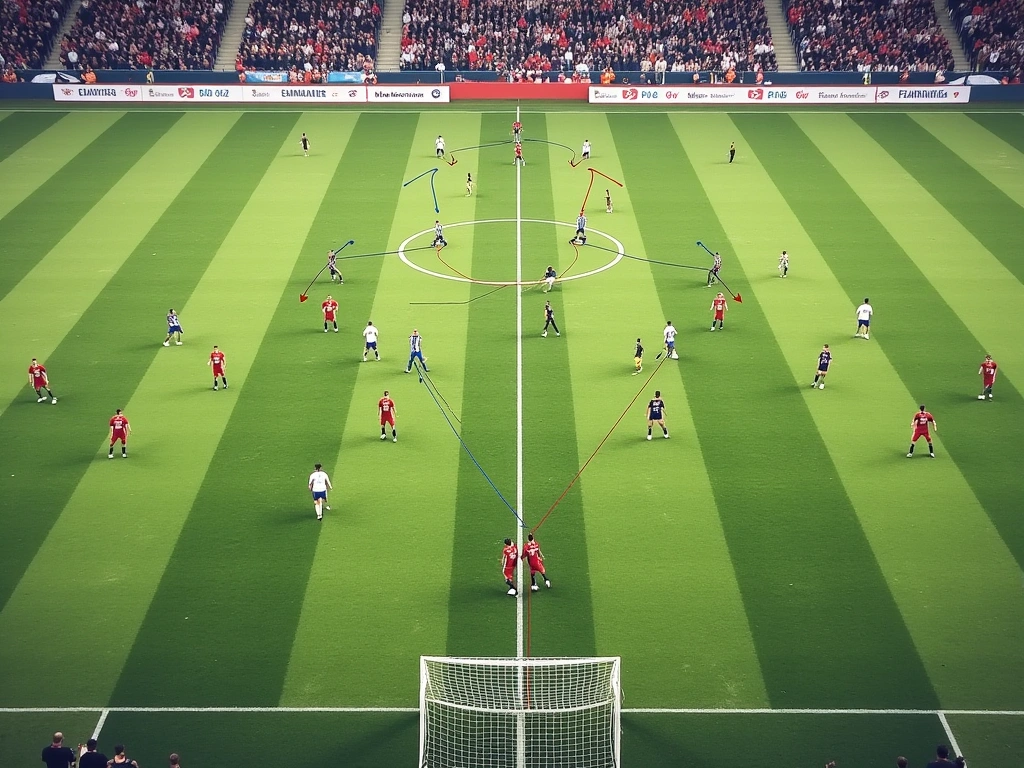
In the modern era, the demands have escalated further with the concept of the “inverted full-back.” Coaches like Pep Guardiola have utilized defenders who drift centrally to act as auxiliary midfielders. This evolution means that a world-class left-back today must be comfortable receiving the ball under pressure in central areas, not just hugging the touchline.
Paolo Maldini: The Standard of Perfection
Paolo Maldini is widely regarded as the benchmark for defensive excellence, spending his entire 25-year career with AC Milan. While he eventually transitioned to center-back, his prime years were spent dominating the left flank. He combined elegance with physical dominance, earning the nickname “Il Capitano” for his leadership and presence.
Maldini famously stated that if he had to make a tackle, he had already made a mistake. This philosophy highlighted his incredible ability to read the game, intercept passes, and position himself perfectly to neutralize attacks before they became dangerous. His anticipation allowed him to dispossess opponents without resorting to fouls, a rarity in an era of aggressive defending.
Offensively, Maldini was underrated, possessing a quality cross and the stamina to support attacks throughout the 90 minutes. His longevity allowed him to bridge different eras of football, adapting seamlessly from the tactical rigidity of the late 80s to the faster, more physical game of the 2000s. He remains a symbol of loyalty and technical mastery.
Roberto Carlos: The Brazilian Blueprint
If Maldini represented defensive perfection, Roberto Carlos represented the ultimate attacking weapon. The Brazilian redefined the position during his time at Real Madrid, acting more like a left-winger than a traditional defender. His massive thigh muscles and explosive speed allowed him to cover the entire flank on his own.
Roberto Carlos is perhaps best known for his defiance of physics, particularly his “banana kick” free-kick against France in 1997. However, his true value lay in his ability to stretch opposition defenses. Because he played so high up the pitch, opposing teams were forced to deploy extra resources to contain him, opening up space for his teammates in the center.
Defensively, he relied on his recovery speed to catch opponents who managed to get behind him. While critics sometimes questioned his positioning, his offensive output was so overwhelming that it rendered those concerns irrelevant. He set the template for the modern Brazilian full-back, influencing generations of players who followed.
Ashley Cole: The Premier League’s Finest
In the fast-paced, physical environment of the English Premier League, Ashley Cole established himself as the complete modern full-back. Playing for both Arsenal and Chelsea, Cole was integral to the “Invincibles” squad and numerous title-winning teams. His game was built on a perfect balance between attack and defense.
Cole is frequently cited by elite wingers, including Cristiano Ronaldo, as their toughest opponent. His agility and low center of gravity allowed him to turn quickly and stick tight to dribblers, making him nearly impossible to beat one-on-one. He possessed the tenacity to tackle hard and the intelligence to intercept through balls.
Offensively, Cole developed a telepathic understanding with wingers like Robert Pires. His overlapping runs were timed to perfection, providing width without leaving his central defenders exposed. Cole’s consistency over more than a decade in the top flight cemented his legacy as England’s greatest left-back.
Marcelo: The Playmaker in Defense
Following in the footsteps of Roberto Carlos at Real Madrid, Marcelo took the attacking full-back role to new heights of technical skill. While Carlos relied on power and pace, Marcelo utilized flair, close control, and passing vision comparable to a number 10. He was a key figure in Madrid’s dominance of the UEFA Champions League during the 2010s.
Marcelo’s relationship with Cristiano Ronaldo on the left flank became legendary. His ability to hold the ball in tight spaces allowed Ronaldo to drift inside, knowing Marcelo would provide the creative spark out wide. His first touch was often cited as one of the best in the world, regardless of position.
Critics often pointed to defensive lapses, but Marcelo’s philosophy was built on the idea that the best defense is a relentless offense. By keeping opponents pinned back and terrified of his dribbling, he minimized the time his team spent defending. His style embodied the joy and creativity of Brazilian football.
David Alaba and the Modern Hybrid
David Alaba represents the current evolution of the footballer who defies positional labels. Starting his career at Bayern Munich, Alaba mastered the left-back position before transitioning into a central defender and even a central midfielder. His versatility is a testament to his supreme football intelligence.
Under the guidance of tacticians like Pep Guardiola, Alaba learned to tuck inside and dictate play from the midfield, a role that requires exceptional passing range and spatial awareness. He is not just a runner; he is a conductor who organizes the team’s shape from the back. His delivery from set-pieces adds another layer of danger to his game.
Alaba’s career highlights the shift away from specialists toward “total footballers” who can influence the game from any zone. His ability to read the game allows him to extinguish fires defensively while initiating attacks with laser-accurate long balls. He serves as the prototype for the future of the position.

Unsung Heroes and Honorable Mentions
While the spotlight often falls on the most famous names, several other left-backs have left indelible marks on football history. Andreas Brehme, the German legend, was known for his ambidexterity and scored the winning goal in a World Cup final. His ability to cross and shoot with either foot made him a tactical nightmare for defenders.
Bixente Lizarazu offered a different profile, combining diminutive stature with immense aggression and energy. A World Cup and European Championship winner with France, Lizarazu was the engine that powered his teams’ left flanks. His partnership with Zinedine Zidane for the national team was crucial to their success.
Denis Irwin of Manchester United remains one of the most underrated players of the Premier League era. Known for his reliability, two-footedness, and expertise at penalties and free-kicks, Irwin was a cornerstone of Sir Alex Ferguson’s dominance. These players prove that effectiveness and consistency are just as valuable as flair and flash.
FAQ
Who is considered the greatest left-back of all time?
Most football historians and pundits consider Paolo Maldini to be the greatest left-back in history due to his defensive perfection, longevity, and leadership. However, those who prioritize attacking contribution often cite Roberto Carlos for his revolutionary impact on the offensive side of the game.
What is the difference between a full-back and a wing-back?
A full-back typically plays in a four-man defense and balances defensive duties with supporting the attack. A wing-back usually plays in a three- or five-man defense, operating further up the pitch with fewer defensive responsibilities and a primary focus on providing width and crosses in the final third.
Why was Ashley Cole considered so difficult to beat?
Ashley Cole combined exceptional recovery speed with tenacious man-marking abilities. He studied his opponents closely and had the agility to change direction instantly, allowing him to shadow tricky wingers like Cristiano Ronaldo without fouling or getting turned around.
What is an inverted full-back?
An inverted full-back is a defender who, during possession, moves centrally into the midfield rather than overlapping down the wing. This tactic, popularized by managers like Pep Guardiola, helps the team control the center of the pitch and prevents counter-attacks through the middle.
Did Paolo Maldini play center-back or left-back?
Paolo Maldini played both positions at a world-class level. He spent the first half and prime of his career primarily as a left-back, where he established his legend. As he aged and lost some pace, he transitioned to center-back, where his positioning and experience allowed him to excel until retirement.
How did Roberto Carlos change the left-back position?
Roberto Carlos proved that a left-back could be a team’s primary attacking outlet. His extreme speed and powerful shooting forced opposing teams to alter their tactical setups to contain him. He normalized the idea of a defender spending the majority of the match in the opponent’s half.
Who are the best current left-backs in the world?
Current standouts include Alphonso Davies, known for his blistering pace, and Andy Robertson, celebrated for his crossing and stamina. Theo Hernandez is also highly rated for his goal-scoring ability from the back, continuing the tradition of dynamic, attacking full-backs.