The housing situations of professional soccer players are a subject of immense curiosity for fans worldwide. While the popular image involves sprawling mansions and luxury penthouses, the reality of where these athletes live is far more complex and varied. A player’s living arrangements are dictated by their career stage, transfer volatility, family needs, and the specific logistical demands of their club.
From teenage prospects living with host families to international superstars residing in high-security enclaves, the housing market for footballers is a unique ecosystem. It involves specialized real estate agents, club liaison officers, and strategic geographic planning that prioritizes recovery and privacy over mere opulence. Understanding where players live offers insight into the transient, high-pressure nature of the modern game.
This article examines the residential lifecycles of soccer players, exploring the transition from youth academies to the first team, the specific neighborhoods favored by elites in major footballing cities, and the critical role of security and amenities in their property choices.
The Academy Years: Host Families and Dormitories
For aspiring professionals, the journey often begins far from home in a youth academy. When teenagers sign with a major club, they frequently move to the club’s city without their parents. To ensure these young athletes maintain a sense of normalcy and discipline, clubs utilize a system often referred to as "digs." In this arrangement, players between the ages of 16 and 18 live with carefully vetted host families.
Host families play a crucial role in the development of a young player. They provide meals, emotional support, and a domestic environment that keeps the player grounded. Clubs prefer this model over unsupervised apartments because it reduces the likelihood of distractions and ensures that nutritional guidelines are followed. The host parents are in regular contact with the club’s welfare officers to report on the player’s behavior and well-being.
Alternatively, some of the world’s most prestigious academies operate purpose-built dormitories within their training complexes. These facilities are designed to immerse the player entirely in the professional lifestyle. Residents have access to on-site tutors, nutritionists, and medical staff. While this environment fosters intense focus, it can also be isolating, making the transition to independent living later in their careers a significant adjustment.
The Transient Phase: Hotels and Short-Term Rentals
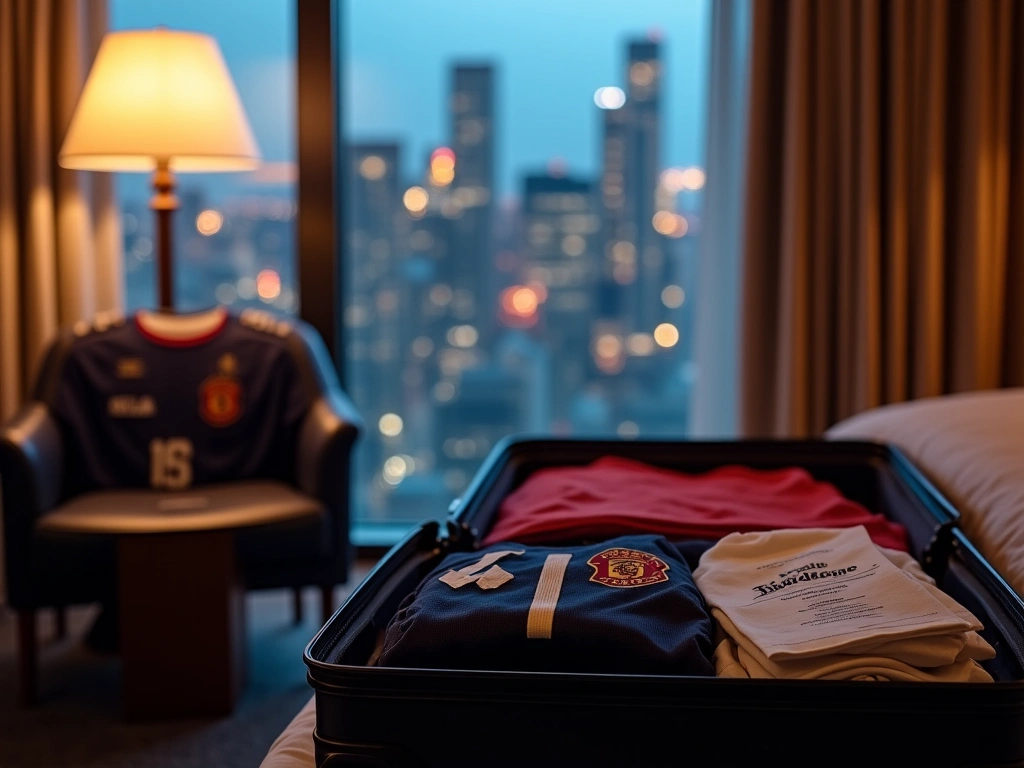
The life of a professional soccer player is inherently unstable. Transfer windows, loan moves, and sudden contract terminations mean that players must often relocate with very little notice. Consequently, luxury hotels become a primary residence for many players, sometimes for months at a time. When a new signing arrives in a city, they typically check into a hotel suite while the club’s liaison team searches for a more permanent solution.
This transient lifestyle presents unique psychological challenges. Living out of a suitcase in a hotel environment can prevent a player from feeling settled, which may impact their performance on the pitch. To mitigate this, many players opt for high-end serviced apartments that offer more privacy and space than a standard hotel room. These rentals are usually fully furnished, allowing the player to move in immediately without worrying about buying furniture or setting up utilities.

Loan players, who may only be at a club for six months or a season, rarely purchase property. Instead, they rely on a network of rental properties known to local real estate agents who specialize in sports clients. These leases often include "diplomatic clauses" or specific break clauses that allow the player to terminate the rental agreement without penalty if they are transferred to a different club unexpectedly.
The Golden Triangle: Proximity to Training Grounds
A common misconception is that soccer players live near the stadiums where they play matches. In reality, most stadiums are located in dense urban centers or industrial districts that offer little privacy and heavy traffic. Instead, players overwhelmingly choose to live near the club’s training ground. Since players spend five or six days a week training and only one day at the stadium, minimizing the daily commute to the training facility is the priority.
This logistical necessity creates specific geographic clusters of wealth, often referred to as "Golden Triangles." For example, in the northwest of England, players for both Manchester and Liverpool clubs frequently reside in the affluent villages of Cheshire. These areas offer large plots of land, privacy, and a commute of under 30 minutes to the training complexes. Similar patterns exist in London, where players for clubs like Chelsea and Arsenal gravitate towards the leafy suburbs of Surrey and Hertfordshire.
Living in these clusters provides a sense of community. Players from rival teams often become neighbors, their children attend the same private schools, and they frequent the same restaurants. This proximity helps foreign players, in particular, to integrate more quickly, as they can connect with compatriots who already understand the local culture and logistics.
Elite Housing: Security, Privacy, and Recovery
For the top tier of international superstars, the primary criteria for a home are security and privacy. High-profile players are frequent targets for burglaries and unwanted media attention. As a result, they gravitate towards gated communities with 24-hour security patrols, high perimeter walls, and advanced surveillance systems. In cities like Madrid, exclusive estates such as La Finca are renowned for their fortress-like security, making them the default choice for players from the city’s major clubs.
Beyond security, the modern footballer’s home is an extension of their workplace. The properties are often equipped with professional-grade amenities designed to prolong their careers. It is common for homes to feature state-of-the-art gymnasiums, heated swimming pools, and sauna facilities. More advanced setups may include cryotherapy chambers for muscle recovery and hyperbaric oxygen tanks.
Architectural preferences also lean towards the contemporary and functional. Open-plan living spaces, cinema rooms, and extensive garages for vehicle collections are standard requirements. However, the most critical feature is often the garden. A large, secluded outdoor space is essential for players with families, allowing them to enjoy time outside without being photographed by paparazzi or approached by fans.
The Role of Player Liaison Officers
Behind every professional player’s housing decision is a team of support staff known as Player Liaison Officers. These club employees are the unsung heroes of modern football logistics. Their job is to ensure that the player can focus entirely on football by removing the administrative burdens of daily life. When a player signs, the liaison officer is responsible for curating a list of potential properties, arranging viewings, and negotiating lease terms.
The scope of their assistance extends far beyond just finding the house. Liaison officers often handle the setup of utilities, internet, and satellite television. They assist with finding schools for the player’s children and may even help recruit domestic staff such as cleaners, chefs, or gardeners. For foreign players arriving without speaking the local language, this support is indispensable.
This concierge-style service ensures that players do not accidentally rent in unsafe areas or sign unfavorable contracts. The liaison officers maintain relationships with trusted real estate agents and landlords who understand the specific needs of footballers, such as the need for short notice periods and high levels of discretion.
Retirement and Post-Career Living
When a player’s career comes to an end, their housing choices often shift dramatically. The necessity of living near a specific training ground evaporates, giving them the freedom to choose a location based on lifestyle or family roots. Many players choose to return to their country or city of origin to be closer to extended family and old friends.
However, a significant number of retired professionals choose to remain in the cities where they spent the peak of their careers. After spending a decade or more in a specific area, their children are often settled in local schools, and the family has established a social network. These ex-players often transition from the secluded mansions of the countryside to more urban settings or move into property development themselves, utilizing the capital they accumulated during their playing days.
Some former players maintain multiple residences, keeping a base in the city where they work as pundits or coaches while owning vacation properties in warmer climates. This portfolio approach allows them to maintain their professional connections while enjoying the leisure time that was unavailable during their intense playing schedules.
FAQ
Do soccer players buy or rent their homes?
It is a mix of both, depending largely on the player’s contract status and long-term intentions. Players on long-term contracts (4-5 years) are more likely to purchase property as an investment and to feel settled. However, players on loan or those who fear a potential transfer often prefer to rent. Renting offers flexibility, allowing them to move quickly without the complex process of selling a high-value asset.
Why do players rarely live in city centers?
While city centers offer nightlife and culture, they lack the privacy and space that professional athletes require. City apartments rarely have the square footage needed for home gyms or large garages, and the risk of being recognized and hassled in public is much higher. Furthermore, the commute from a city center to a suburban training ground can be arduous due to traffic, prompting players to choose quieter, outer-ring suburbs.
What happens to a player’s house when they get transferred?
If a player owns their home, they may choose to keep it as a rental investment, often leasing it to a new incoming player at their former club. This creates a cycle where certain houses are passed down through generations of players. If they were renting, they typically invoke a "break clause" in their tenancy agreement that allows them to end the lease early due to professional relocation.
Do clubs provide housing for all players?
Clubs generally provide housing only for academy players and very young professionals. For senior first-team players, the club facilitates the search through liaison officers but does not usually own the properties. The player is responsible for paying the rent or mortgage from their salary, although the club may cover hotel costs during the initial relocation period.
What are "digs" in soccer terminology?
"Digs" refers to the practice of housing young academy players with local host families. This is a traditional method used particularly in the United Kingdom. The goal is to provide a stable, family-oriented environment for teenagers who have moved away from home, ensuring they learn life skills and discipline outside of the football academy environment.
Why do so many players live in the same neighborhoods?
Players cluster in specific neighborhoods for security, convenience, and community. Once an area is established as safe and private, word spreads within the locker room. Additionally, real estate agents steer players toward these areas because the houses already meet the specific requirements of athletes, such as high walls, security gates, and proximity to the training ground.