Soccer is a sport played in varying climates, from the scorching heat of summer tournaments to the freezing depths of winter league matches. While the standard kit consists of a jersey, shorts, socks, shin guards, and cleats, spectators often notice players wearing gloves. This accessory serves different purposes depending on the player’s position and the conditions of the match.
For goalkeepers, gloves are a mandatory piece of technical equipment designed for catching, parrying, and protection. Without them, the modern game would be nearly impossible to play at a high level due to the velocity of the ball. However, outfield players—strikers, midfielders, and defenders—also frequently don gloves, though their reasons differ significantly from those of the netminder.
Understanding the utility of soccer gloves requires looking at the intersection of physics, physiology, and psychology. Whether it is for thermal regulation, grip enhancement during throw-ins, or injury prevention, gloves have become a staple in the kit bag of professional and amateur athletes alike. This guide explores the technical and practical reasons behind this common on-field accessory.
The Technical Anatomy of Goalkeeper Gloves
For the goalkeeper, gloves are not a fashion statement; they are the primary tool of the trade. The technology behind these gloves has evolved drastically from the simple woolen mitts of the early 20th century. Modern goalkeeper gloves are sophisticated pieces of engineering designed to maximize the friction coefficient between the hand and the latex ball.
The palm of a professional glove is typically made from high-grade latex foam. This material is porous and soft, allowing it to absorb the impact of a shot traveling at high speeds. When slightly dampened, the latex becomes tacky, creating a suction-like effect that helps the keeper hold onto the ball. This grip is vital for catching crosses in traffic or holding onto a powerful drive that might otherwise rebound to an opponent.
Beyond grip, the internal structure of the glove often includes protective elements known as finger spines or stays. These are flexible plastic inserts running down the back of each finger. They allow the hand to close into a fist but lock rigid when bent backward. This mechanism helps prevent hyperextension injuries when a goalkeeper tips a powerful shot over the bar with their fingertips.
Thermal Regulation and Physiological Focus
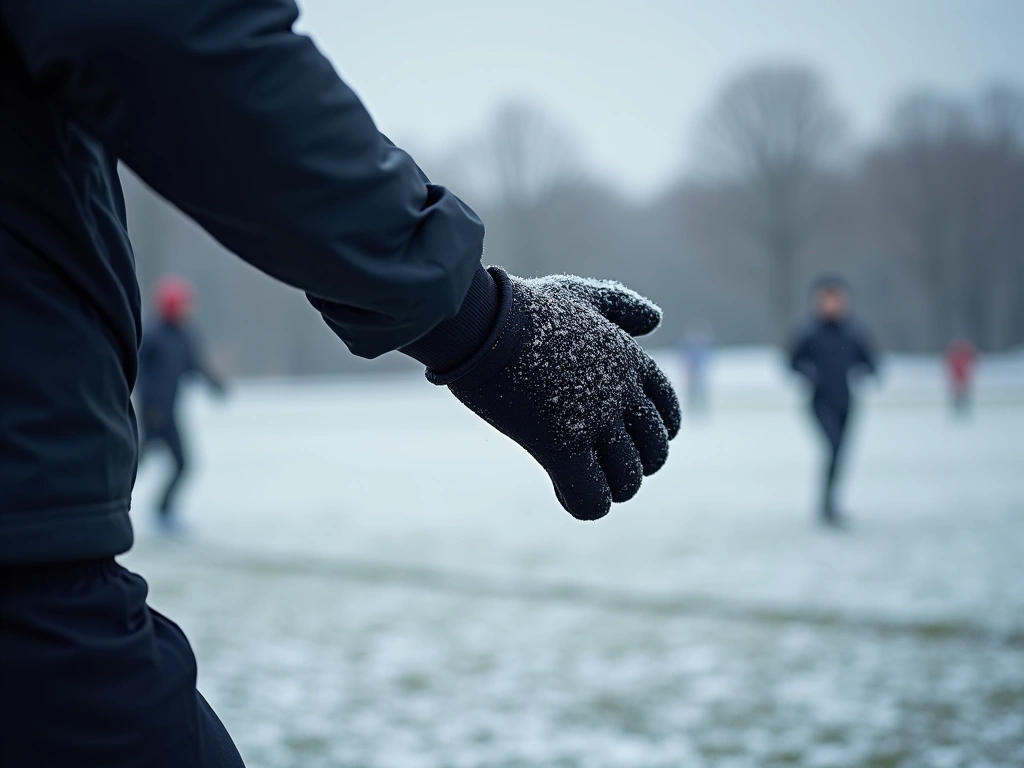
For outfield players, the primary motivation for wearing gloves is almost always temperature regulation. Soccer is an outdoor winter sport in many parts of the world, including the United Kingdom, Northern Europe, and parts of North America. Matches are frequently played in temperatures hovering near or below freezing.
When the human body is exposed to cold, a physiological process called vasoconstriction occurs. Blood vessels in the extremities constrict to preserve core body heat, leading to cold, numb, and stiff fingers. While soccer is a game played mostly with the feet, balance and agility rely on the entire body. Numb hands can be a significant distraction, pulling a player’s mental focus away from tactical positioning and toward their physical discomfort.
By wearing thermal field gloves, players maintain a comfortable hand temperature. This allows them to remain fully focused on the game state rather than the elements. It is a concept of marginal gains; if a player is even 1% more focused because they are not shivering, that advantage is worth the investment in equipment.
Grip Mechanics for Throw-Ins
While outfield players do not use their hands to control the ball during open play, the throw-in is a critical set-piece restart. In wet or snowy conditions, a soccer ball becomes slippery and difficult to handle. A slip during a throw-in can result in a foul throw, turning possession over to the opposition, or a weak delivery that is easily intercepted.
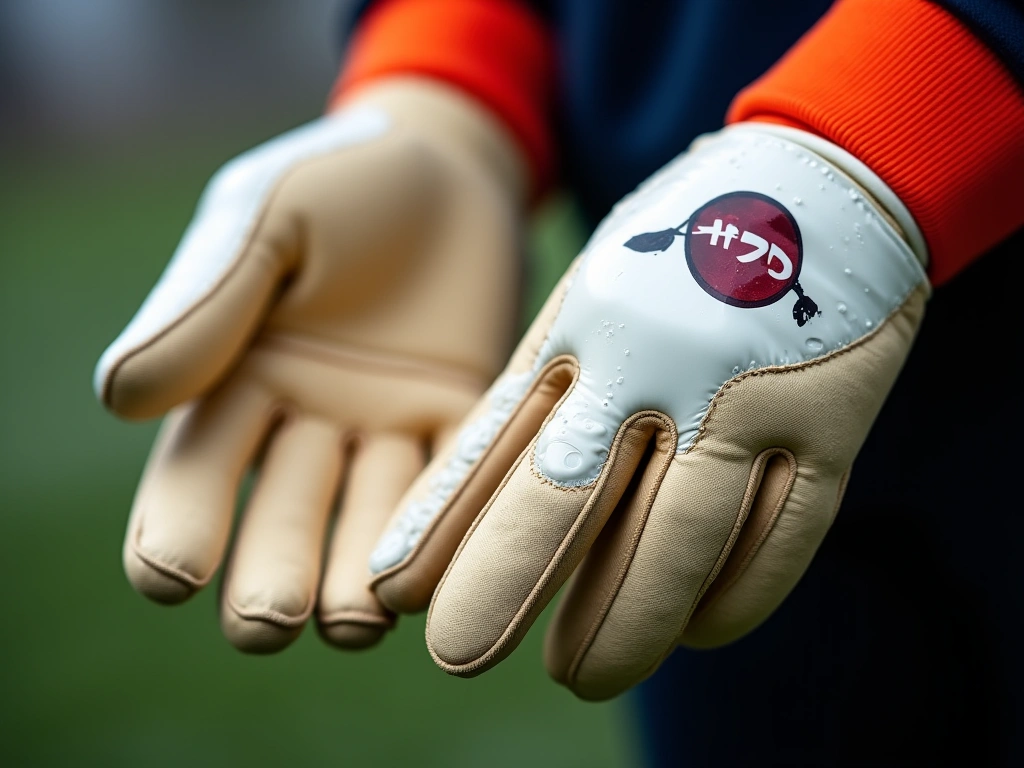
Field player gloves often feature silicone grip zones on the palms and fingers. These patterns increase friction against the wet surface of the ball. For teams that utilize a long throw specialist—a player capable of launching the ball into the penalty box like a corner kick—a secure grip is essential. The gloves ensure that the player can generate maximum leverage and distance without the ball slipping from their grasp.
This tactical advantage is why you may sometimes see a player wearing gloves even if the weather is not severely cold. If the match is played in torrential rain, the grip benefit outweighs the thermal benefit. The ability to execute a precise, powerful throw-in can lead to goal-scoring opportunities in tight matches.
Protection Against Abrasions and Impact
Soccer is a contact sport that involves frequent collisions, sliding tackles, and falls. Modern pitches vary between natural grass and artificial turf. Artificial surfaces, in particular, can be abrasive to exposed skin. When a player slides or falls, their hands are often the first point of contact with the ground to break the fall.
Gloves provide a physical barrier between the skin and the playing surface. This layer helps prevent “turf burn,” painful abrasions, and cuts that can occur during a scramble for the ball. While field gloves are generally thin, they offer enough abrasion resistance to protect the palms and knuckles from surface friction.
Additionally, in crowded situations like corner kicks, players are often stepping on one another in the box. Metal or composite cleats can cause significant injury to hands that are flailing for balance. While a fabric glove cannot stop a crushing injury, it offers a layer of defense against scratches, cuts, and minor impacts from opposing players’ boots.
Psychological Anchoring and Routine
Athletic performance is deeply rooted in psychology. Many players develop specific routines and equipment preferences that help them enter a competitive state of mind. This phenomenon is sometimes referred to as “enclothed cognition,” where the attributes of the clothing affect the wearer’s psychological processes.
For some players, putting on gloves is part of a pre-game ritual that signals it is time to perform. The tightness of the glove and the sensation of being “armored” can boost confidence. If a player feels faster or more agile while wearing a specific kit configuration, they are likely to perform better due to that confidence, regardless of the objective physical benefits.
This explains why some players continue to wear gloves even after they have warmed up, or why they might wear short sleeves with gloves—a stylistic choice that has become popular in professional leagues. It is about comfort, identity, and the feeling of being ready for battle.
IFAB Laws and Equipment Regulations
The International Football Association Board (IFAB) governs the rules of soccer globally. Law 4 of the Laws of the Game pertains to “The Players’ Equipment.” According to these regulations, players are prohibited from wearing anything that is dangerous to themselves or another player.
Gloves are generally permitted for all players, not just goalkeepers, provided they do not constitute a danger. This means field player gloves cannot have hard, protruding plastic or metal elements that could injure an opponent during a collision. The referee has the final authority to inspect equipment before the match.
Most commercial field gloves are made of soft, lightweight synthetic materials like polyester, fleece, and silicone, which are fully compliant with safety regulations. Goalkeeper gloves are also scrutinized to ensure they do not contain unauthorized substances that could give an unfair advantage regarding ball retention, though standard latex is universally accepted.
FAQ
Are field players allowed to wear gloves in the summer?
Yes, there are no rules restricting the use of gloves based on the season. However, it is rare to see field players wearing gloves in hot weather because they can cause hands to sweat excessively, leading to discomfort. Players usually only wear them in warm weather if they require extra grip for throw-ins or have a specific hand injury they wish to protect.
Do gloves help goalkeepers catch the ball better?
Absolutely. Goalkeeper gloves are engineered with latex palms that significantly increase friction. This “tackiness” allows keepers to catch high-velocity shots that would likely slip through bare hands. They also increase the surface area of the hand, giving the keeper a larger barrier to stop the ball.
Why do some players wear short sleeves with gloves?
This is often a matter of personal preference regarding body temperature regulation. A player might want to keep their core cool and ventilated with short sleeves while keeping their extremities warm with gloves. It allows for heat dissipation from the arms while preventing the fingers from becoming numb and stiff.
Can gloves prevent broken fingers?
Standard field player gloves offer very little protection against fractures as they are made of soft fabric. Goalkeeper gloves with “finger save” or spine technology offer better protection against hyperextension (bending fingers backward), but they cannot guarantee the prevention of broken bones during high-impact collisions or if the hand is stepped on.
Do professional players get fined for wearing gloves?
No, players are not fined for wearing gloves as they are considered optional equipment under FIFA and IFAB laws. However, players must ensure their gloves comply with their team’s sponsorship agreements. Wearing a brand that conflicts with the club’s kit manufacturer can sometimes lead to internal disciplinary issues or fines from the club, not the league.
What is the difference between negative cut and roll finger gloves?
These terms refer to how goalkeeper gloves are stitched. A “negative cut” has the stitching on the inside, creating a tight, snug fit that offers excellent ball feel. A “roll finger” cut wraps the latex around the fingers and stitches it to the backhand, providing a larger surface area for catching but a looser fit. Goalkeepers choose based on their preference for feel versus surface area.
How do players keep their gloves sticky?
Goalkeepers maintain the grip of their gloves by keeping the latex clean and slightly damp. Dirt and dust clog the pores of the latex, reducing grip. Keepers often spit on their gloves or use a water bottle to dampen them during a match. Field players do not typically need to maintain stickiness, as their gloves rely on silicone patterns rather than porous latex.