Selecting the correct soccer cleats involves much more than picking a favorite color or brand endorsement. For female athletes, the choice of footwear directly influences biomechanics, ball control, and stability on the pitch.
Women’s feet differ anatomically from men’s feet in several key areas, including the ratio of the heel to the forefoot and the height of the arch. Manufacturers now design cleats specifically built on female-specific lasts to accommodate these structural differences, moving away from the old approach of simply sizing down men’s boots.
Understanding the technical specifications of soccer footwear—from stud configuration to upper materials—allows players to maximize their potential. This guide explores the engineering behind women’s soccer cleats, how to match footwear to playing surfaces, and the critical elements of fit and maintenance.
The Anatomy of a Female-Specific Soccer Cleat
The most significant evolution in soccer footwear is the development of the female-specific last. A “last” is the mechanical form upon which a shoe is constructed, determining its internal volume and shape. Generic unisex cleats often fail to account for the distinct shape of a woman’s foot, leading to slippage and reduced energy transfer.
Women generally possess a narrower heel in relation to their forefoot width compared to men. A cleat with a wide heel cup can cause the foot to slide inside the boot during sharp turns, reducing stability. Female-specific designs feature a tighter heel counter to lock the foot in place, ensuring that movement translates directly to the ground.
Another anatomical consideration is the instep height and arch structure. Many female players have higher arches, which changes how pressure is distributed across the soleplate. Modern cleats designed for women often include modified sock liners and arch support systems to distribute stud pressure more evenly, reducing fatigue during a ninety-minute match.
Surface Science: Matching Studs to the Pitch
Traction is the foundation of performance, but the wrong traction on the wrong surface can negatively impact play. The geometry and length of the studs determine how the boot interacts with the ground. Using the correct soleplate configuration is essential for allowing proper rotation and acceleration.
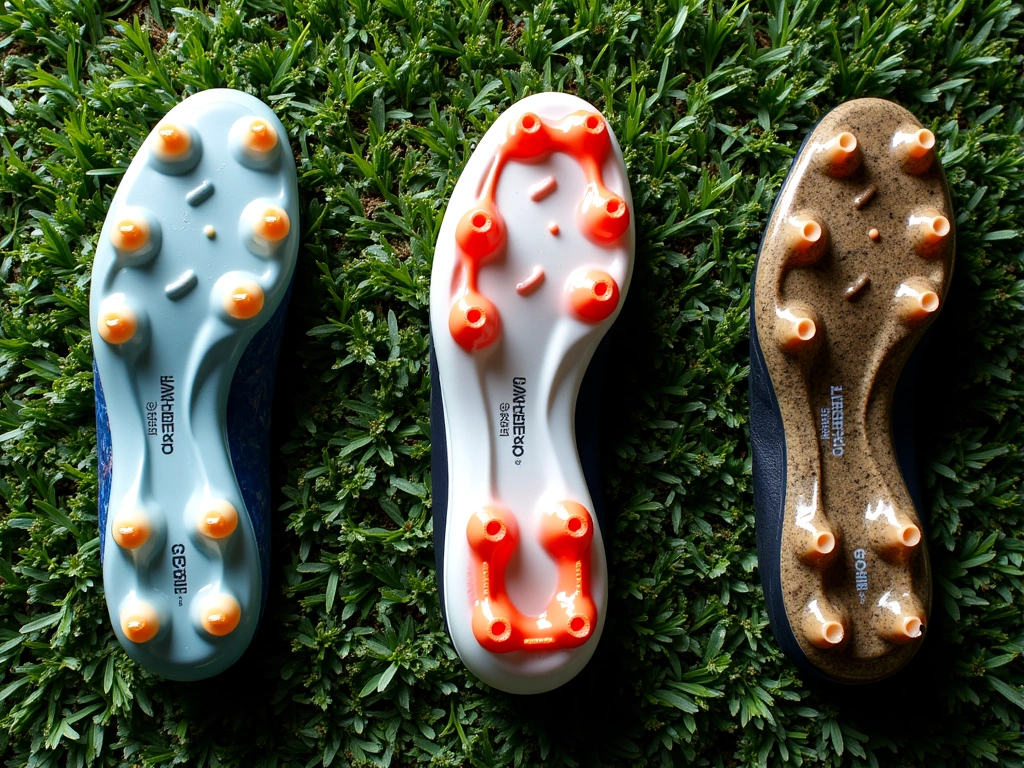
Firm Ground (FG) cleats are the standard for natural grass fields that are dry or slightly moist. These typically feature molded studs made of hard plastic. The configuration often mixes bladed studs for aggressive traction during sprinting with conical studs for easier pivoting. However, using FG cleats on artificial turf can lead to excessive grip, causing the foot to plant too firmly while the leg rotates.
Artificial Grass (AG) cleats are engineered specifically for modern synthetic turf surfaces. These soleplates feature a higher number of shorter, hollowed-out studs. This design distributes weight across a larger surface area to prevent the studs from sinking too deep into the rubber crumb infill. The circular shape of AG studs facilitates smooth rotation, allowing the player to pivot without the boot getting “stuck” in the turf.
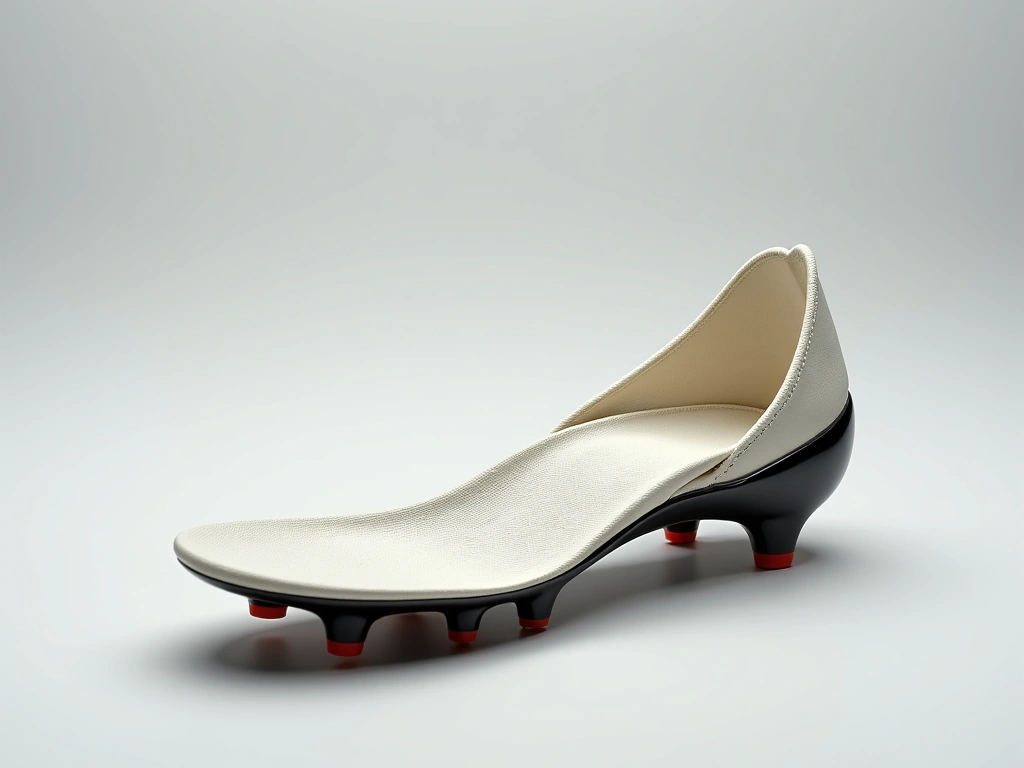
Soft Ground (SG) options are reserved for wet, muddy natural grass. They usually utilize longer, detachable metal studs mixed with plastic blades. This aggressive pattern penetrates deep into soft earth to provide grip where standard cleats would slip. These are rarely suitable for youth leagues or firm surfaces, as the metal studs can cause pressure points on hard ground.
Upper Materials: Leather vs. Synthetic vs. Knit
The “upper” is the part of the cleat that covers the foot and makes contact with the ball. The material chosen for the upper dictates the touch, weight, and water resistance of the boot. Players must weigh the benefits of traditional comfort against modern lightweight engineering.
Kangaroo Leather (K-Leather) and calfskin remain the gold standard for comfort and moldability. Natural leather stretches to mimic the shape of the foot, providing a custom fit after a break-in period. It offers a dampened, soft touch on the ball, which is favored by midfielders and defenders who prioritize control. However, natural leather absorbs water unless treated and requires more maintenance to prevent drying out.
Synthetic Uppers are generally lighter and more durable than leather. Modern high-grade synthetics are designed to be thinner, offering a “barefoot” feel that brings the foot closer to the ball. These materials do not over-stretch and absorb very little water, making them ideal for wet conditions. Speed boots often utilize thin synthetics to minimize weight.
Knitted Uppers have gained popularity for their sock-like sensation. These boots use a one-piece woven material, often coated with a thin silicone or polyurethane layer for structure and waterproofing. Knit boots offer a seamless fit that moves with the foot, eliminating hard edges or tongue slippage. They provide a compressive feel that many players find supportive around the ankle.
Position-Specific Features and Technologies
While any player can wear any boot, manufacturers design specific “silos” to enhance the attributes required for different positions. Understanding these categories helps players choose a tool that complements their style of play.
Speed Boots are typically worn by wingers and strikers. The priority here is minimizing weight. These cleats feature aggressive traction patterns, often with bladed studs in the forefoot to act like track spikes for sprinting. The uppers are razor-thin to provide a responsive feel, though they offer less protection against tackles.
Control Boots are designed for midfielders who dictate the play. These cleats often feature friction-enhancing elements on the upper, such as 3D textures, rubber fins, or memory foam pads. These elements help dampen the ball’s impact for trapping and generate spin during passing. The soleplates are usually more flexible to accommodate constant turning and changing of direction.
Defensive/Power Boots focus on stability and protection. They may have a stiffer soleplate to aid in planting the foot for long balls or tackles. The upper is often slightly thicker or padded, providing protection for the foot during challenges. A solid external heel counter is common in these boots to provide maximum lockdown and stability.
The Mechanics of Fit and Lockdown
The most expensive technology is useless if the cleat does not fit correctly. “Lockdown” refers to the boot’s ability to hold the foot securely without sliding. When a player changes direction, the foot should not roll over the side of the soleplate.
Proper length is determined by the space in the toe box. A general rule is to have a thumb’s width (about half an inch) between the longest toe and the end of the shoe. Too much space leads to tripping and poor ball contact; too little space causes bruising and black toenails (subungual hematoma).
Width is equally critical. If the upper is bulging over the soleplate, the boot is too narrow, which compromises stability. If the laces must be pulled completely tight to feel secure, the boot is likely too wide. Lacing systems have also evolved, with some boots offering off-center lacing to create a larger strike zone, or “ghost lacing” systems that cover the laces for a cleaner touch.
Maintenance and Longevity
Soccer cleats are high-performance equipment that endure extreme stress, moisture, and abrasion. Proper care significantly extends the lifespan of the boots and maintains the integrity of the materials. Neglect is the primary cause of premature separation between the upper and the soleplate.
After every match, mud and dirt should be removed using a soft brush and cool water. Leaving mud on the boots draws moisture out of leather, causing it to crack, and can degrade the stitching on synthetic boots. Harsh chemicals or washing machines should be avoided, as the heat and agitation can dissolve the glues holding the shoe together.
Drying is the most critical step. Cleats should never be placed near a radiator, heater, or in a tumble dryer. High heat causes synthetic materials to warp and leather to harden and shrink. Instead, stuffing the boots with newspaper absorbs internal moisture and helps them retain their shape while air drying.
FAQ: Women’s Soccer Cleats
What is the difference between men’s and women’s soccer cleats?
The primary difference lies in the shape of the last (the mold) used to build the shoe. Women’s cleats are typically narrower in the heel and wider in the forefoot relative to the heel size. They may also accommodate a lower instep. While women can wear men’s cleats, they often experience heel slippage or excess volume in the midfoot, which can affect stability.
Can I wear Firm Ground (FG) cleats on artificial turf?
It is generally not recommended to wear FG cleats on artificial turf (AG). FG studs are often too long and bladed, which provides too much traction on synthetic surfaces. This excessive grip can cause the boot to get stuck when the player tries to pivot. AG cleats have shorter, circular studs designed to release from the turf easily, allowing for smoother rotation.
How do I break in new soccer cleats?
Breaking in cleats gradually is the best way to prevent blisters. Start by wearing them for short periods, such as during a light jog or warm-up, before using them in a full match. For leather boots, wearing them in a warm shower (the “hot water trick”) and then keeping them on while they dry can help mold the leather to the foot, though this should be done sparingly to avoid damaging the material.
How often should soccer cleats be replaced?
The lifespan of a cleat depends on the frequency of play and the playing surface. For a player training and playing 3-4 times a week, a pair of high-quality cleats typically lasts a single season (6-8 months). Signs that replacement is needed include worn-down studs that no longer provide traction, separation of the upper from the sole, or significant holes in the upper material.
Are laceless cleats better than laced ones?
Laceless cleats offer a clean striking surface free of interference, which some players prefer for shooting and passing. However, they rely entirely on the compression of the upper materials to hold the foot in place. Players with very narrow feet may find they lack sufficient lockdown, while players with high arches might find them difficult to put on. Laced boots offer more adjustability for a custom fit.
What should I do if I have wide feet?
Players with wide feet should look for cleats made from natural leather, such as kangaroo leather, as these will stretch and mold to the foot over time. Synthetic boots generally hold their shape and will not stretch significantly. Some brands also offer specific “wide fit” variations of their popular silos. Avoid speed boots, which tend to have the narrowest profiles.