In the rapidly evolving landscape of women’s professional soccer, athleticism has become just as crucial as technical ability. While agility, vision, and ball control remain the cornerstones of a world-class player, physical stature is increasingly influencing tactical setups and recruitment strategies. Height, specifically, offers distinct advantages that can dictate the flow of a match, particularly in set-piece situations and defensive organization.
The modern game sees a diverse range of body types succeeding at the highest level, but the presence of exceptionally tall players creates unique challenges for opponents. From commanding goalkeepers who dominate the penalty area to towering center-backs who act as aerial fortresses, height is a tangible asset. Coaches often build specific strategies around these players, utilizing their reach for defensive stability or their aerial prowess as an offensive weapon.
Understanding the impact of the tallest female soccer players requires looking beyond simple measurements. It involves analyzing how these athletes utilize their biomechanics to control space, win physical duels, and execute plays that shorter counterparts cannot. This exploration covers the tactical roles of the sport’s tallest figures, the specific advantages they bring to the pitch, and the profiles of the athletes who have defined what it means to be a giant in the women’s game.
The Tactical Physics of Height in Modern Soccer
Height in soccer is not merely a static statistic; it is a dynamic physical attribute that alters the geometry of the game. Biomechanically, taller players often possess a longer stride length, allowing them to cover ground efficiently once they reach top speed. While they may sometimes lack the explosive initial acceleration of a shorter player with a lower center of gravity, their ability to intercept passes and tackle from a distance is superior due to their extended reach.
The most obvious application of height is in the aerial duel. In a sport where the ball spends a significant amount of time in the air—whether from goal kicks, crosses, or clearances—the ability to win a header is invaluable. A player standing over six feet tall has a natural vertical advantage that forces opponents to commit fouls or lose possession. This dominance is statistically evident in the number of aerial duels won by tall center-backs and target forwards compared to the league average.
Furthermore, height influences the psychological aspect of the match. A towering defensive line can intimidate attacking players, forcing them to alter their approach. Instead of floating crosses into the box, opposing wingers might be forced to play low, cut-back passes to avoid the aerial superiority of a tall defender. This dictates the tactical rhythm of the game, forcing the opposition to abandon their preferred style of play in favor of ground-based strategies.
Goalkeepers: The Position Where Inches Define Careers
Nowhere is height more critically analyzed than in the goalkeeper position. As the goal frame remains a fixed size—8 feet high and 24 feet wide—a goalkeeper’s ability to cover that surface area is directly correlated to their wingspan and standing reach. Modern scouting for goalkeepers heavily favors taller athletes who can reach the top corners without needing a perfect vertical leap every time.
Players like Casey Murphy of the United States and Christiane Endler of Chile exemplify the modern prototype for elite goalkeepers. Standing well over six feet, these athletes possess a “catch radius” that allows them to claim crosses that would otherwise be dangerous scoring opportunities. When a goalkeeper can catch a corner kick at the edge of the six-yard box, it relieves immense pressure on the defense, effectively neutralizing the opponent’s set-piece threat.
However, height in goalkeeping requires a trade-off in ground mechanics. Taller keepers must work extensively on their ability to get down quickly for low shots. The best tall goalkeepers combine their natural reach with elite agility training, ensuring that their size does not become a liability against low, driven shots. The evolution of goalkeeper training has allowed taller women to maintain the reflexes and flexibility previously associated with smaller, more acrobatic keepers.
Wendie Renard and the Center-Back Enforcers
When discussing the tallest and most impactful female soccer players, Wendie Renard is invariably the central figure. Standing at approximately 1.87 meters (6 feet 2 inches), the French international and Olympique Lyonnais captain has redefined the role of the center-back. Her height is not just a defensive tool; it is a primary offensive strategy for her club and country.
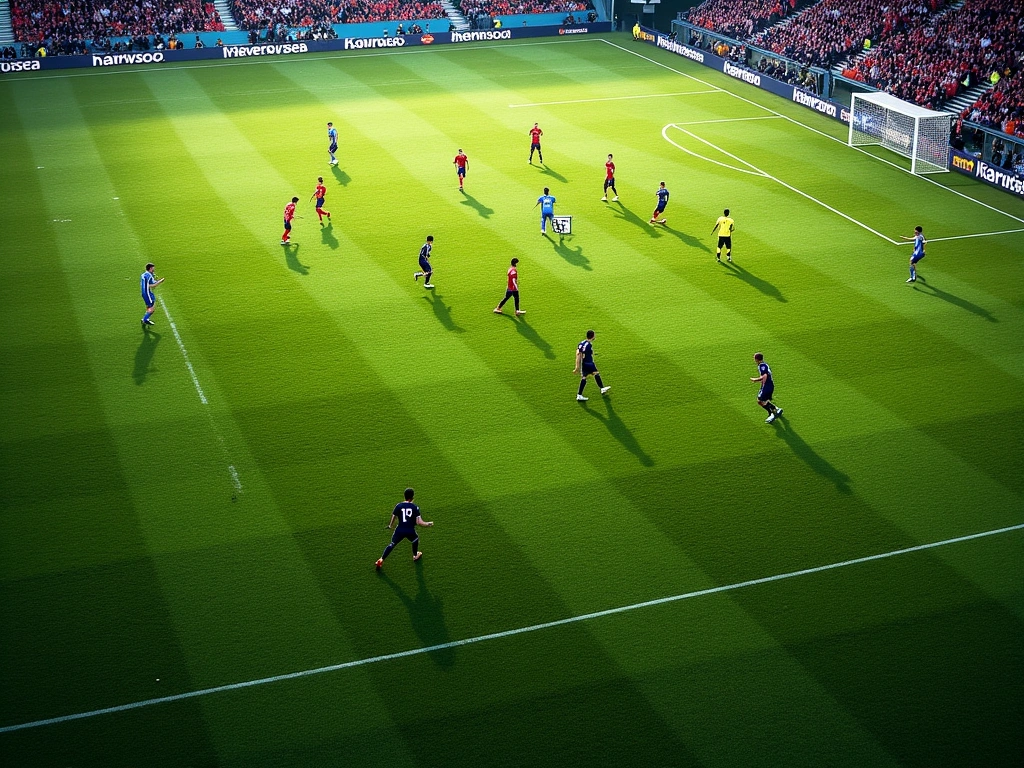
Defensively, Renard utilizes her frame to marshal the backline. Her long legs allow for last-ditch tackles that shorter defenders could not attempt without risking a penalty. In zonal marking systems, she acts as a sweeper of the skies, clearing high balls before they can reach opposing strikers. Her presence forces opposing teams to avoid high crosses entirely, limiting their offensive options.
Offensively, Renard is one of the most prolific goal-scoring defenders in history. Her height makes her the primary target for every corner kick and free-kick. Teams often assign two or even three defenders to mark her, which creates space for her teammates. If left single-marked, the mismatch is almost impossible to defend. Her technique in heading—driving the ball downward with power—combined with her height, makes her a unique dual-threat player.
The Target Forward: Abby Wambach’s Aerial Legacy
While Wendie Renard dominates the defense, the history of the “target forward” in women’s soccer is anchored by the legacy of Abby Wambach. Although retired, Wambach remains the benchmark for how height and physical strength can be utilized in the attacking third. Standing 5 feet 11 inches, she was not the tallest player statistically, but her functional playing height was immense due to her jumping ability and timing.
The role of a tall target forward is to serve as an outlet for the team. When the midfield is under pressure, defenders can play a long ball forward, trusting the tall striker to hold up the play. This requires immense upper-body strength to shield the ball from defenders while waiting for teammates to join the attack. This style of play, often referred to as “route one” football, becomes a sophisticated tactic when executed by elite tall forwards.
Wambach’s record-breaking goal tally was built on her fearlessness in the air. She popularized the “power header,” often scoring from outside the six-yard box—a rarity in the sport. Modern players who fit this mold continue to force defenses to sit deeper. If a defense pushes up too high, they risk leaving the tall striker isolated against a smaller fullback, a mismatch that usually results in a goal scoring opportunity.
Midfield Towers: Controlling the Engine Room
Traditionally, midfielders were expected to be small, low-to-the-ground technicians like Xavi or Andres Iniesta. However, the women’s game has seen the rise of the tall, box-to-box midfielder. Players like Taylor Kornieck (USA) and Jill Roord (Netherlands) bring a different dimension to the center of the park. Kornieck, standing at 6 feet 1 inch, represents a new hybrid of playmaker and enforcer.
A tall midfielder disrupts passing lanes simply by existing in the space. Their long legs allow them to intercept passes that would bypass smaller players. This “radius of influence” means they can control a larger zone of the pitch without needing to run as much as a shorter counterpart. In possession, they offer a unique outlet for goal kicks, allowing the team to bypass the opponent’s press by chipping the ball to the tall midfielder’s chest or head.
The challenge for tall midfielders is maintaining the agility required to turn in tight spaces. Modern training focuses on footwork and hip mobility to ensure these taller athletes can pivot quickly. When a player combines the vision of a playmaker with the physical stature of a center-back, they become a dominant force capable of controlling the tempo of the entire match.
Notable Giants of the Women’s Game
Several players have leveraged their exceptional height to carve out successful careers at the international level. These athletes demonstrate that height is an advantage across all positions, not just in goal.
- Wendie Renard (France): Widely considered the most dominant aerial player in the history of women’s football. Her trophy cabinet with Lyon includes numerous Champions League titles, many of which were secured partly due to her defensive and offensive headers.
- Taylor Kornieck (USA): A modern example of extreme height in the midfield. Her ability to win headers in the center circle and transition immediately to attack provides a tactical option that few national teams possess.
- Casey Murphy (USA): A goalkeeper whose 6-foot-1 frame allows her to dominate the penalty area. Her reach is a significant asset in penalty shootouts and defending corner kicks.
- Christiane Endler (Chile): Often cited as one of the best goalkeepers in the world, her height (approx. 6 feet) is complemented by world-class reflexes, making her nearly unbeatable from long range.
- Sam Mewis (USA): Known as the “Tower of Power,” Mewis (approx. 6 feet) utilized her height to dominate midfield battles, winning balls in the air and driving forward with long, powerful strides before her retirement.
The Future of Physicality in Scouting
As women’s soccer continues to professionalize, scouting networks are becoming more sophisticated in identifying physical outliers. Academies are no longer looking solely for technical skill; they are identifying young athletes with projected height and providing them with the technical training to succeed. This suggests that the average height of elite teams may continue to trend upward.

The integration of sports science means that taller players are better protected against injuries that historically plagued them, such as knee and ankle issues. With better conditioning, tall players are playing longer careers and maintaining their mobility deeper into their 30s. This evolution ensures that the battle for aerial dominance will remain a central theme in tactical analysis for years to come.
FAQ
Who is officially the tallest female soccer player?
While rosters change frequently, Wendie Renard is widely recognized as one of the tallest elite outfield players in history, standing at approximately 1.87 meters (6 feet 2 inches). There may be taller players in amateur or lower leagues, but Renard holds the distinction at the highest level of international and club competition.
Does height matter for female goalkeepers?
Yes, height is a significant advantage for goalkeepers. A taller keeper has a longer wingspan and standing reach, allowing them to cover more of the goal frame and intercept high crosses. Most top-tier professional teams prioritize goalkeepers who are at least 5 feet 9 inches or taller to handle the physical demands of the position.
Can short players still succeed in professional soccer?
Absolutely. While height provides aerial advantages, shorter players often possess a lower center of gravity, superior balance, and quicker acceleration. Many of the world’s best players, such as Aitana Bonmatí or Crystal Dunn, rely on technical skill, agility, and tactical intelligence rather than physical size to dominate matches.
What is the average height of a women’s soccer player?
The average height varies by position and league, but it generally falls between 5 feet 5 inches and 5 feet 7 inches. Goalkeepers and center-backs tend to be significantly taller than the average, while wingers and outside backs are often closer to or below the average height to maximize speed and agility.
How does height help in defensive positions?
Tall defenders can clear the ball from the penalty area more effectively during corner kicks and free kicks. Their long reach also allows them to make tackles without having to get as close to the attacker, reducing the risk of being dribbled past. They serve as a physical barrier that can block shots and disrupt the opponent’s passing lanes.
Who is Taylor Kornieck?
Taylor Kornieck is an American professional soccer player known for her exceptional height as a midfielder. Standing at 6 feet 1 inch, she became the tallest field player in the history of the US Women’s National Team when she debuted. Her style of play highlights how height can be utilized for ball control and distribution in the midfield, rather than just defense.